

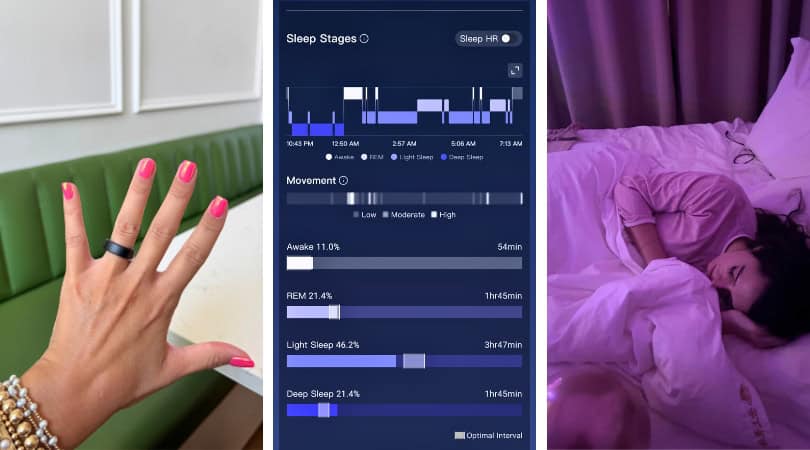
I ended up finally giving in to buy a smart ring despite the hefty price tag because I was desperate for answers and in a place with limited options.
In this blog, I’ll share my personal experience with the RingConn smart ring, what it tracks, and why I’ve found it so helpful. You’ll learn about its sleep monitoring, stress and wellness tracking, continuous vitals tracking, and comfort and battery life.
I was in Hong Kong at the time, and my energy was completely wrecked. For months I had been dealing with this extreme exhaustion that just wouldn’t go away. I’ve had some kind of health issue my whole life, but something had happened this past year that was bringing me to a whole new energy low. I was traveling abroad and instead of enjoying it, I was stuck in the hotel utterly miserable. Even trying to go out would cause my body to shake and at one point my husband had to carry me out of a restaurant because my legs gave out.
Being in a new country meant that I didn’t have many options (not that I felt I had many options in the US with how expensive tests are). I couldn’t easily schedule tests or start seeing specialists. So I started looking for anything that might give me a clue about what was going on with my body.
Originally I had planned to get one of the more well-known smart rings. But there were two things that pushed me toward RingConn instead.
First, it was actually available where I was.
And second, one of the biggest perks for me was that it doesn’t require a subscription. You pay for the ring once and that’s it. Unlike another ring that charges a monthly fee just to access your own data.
That mattered to me a lot. I didn’t want to be stuck paying forever just to see my sleep stats.
This is a health-tracking smart ring that you wear on your finger, and it quietly monitors your body 24/7 via the free RingConn app (yes, free, with no subscription required). That immediately won me over because I was so tired of paying monthly fees for wearables that barely give actionable data.
Table of Contents
What It Tracks (And What I Personally Look At Most)
One of the biggest reasons I use this every day is because it shows loads of health details without being bulky like a smartwatch:
Sleep Monitoring You Can Actually Use
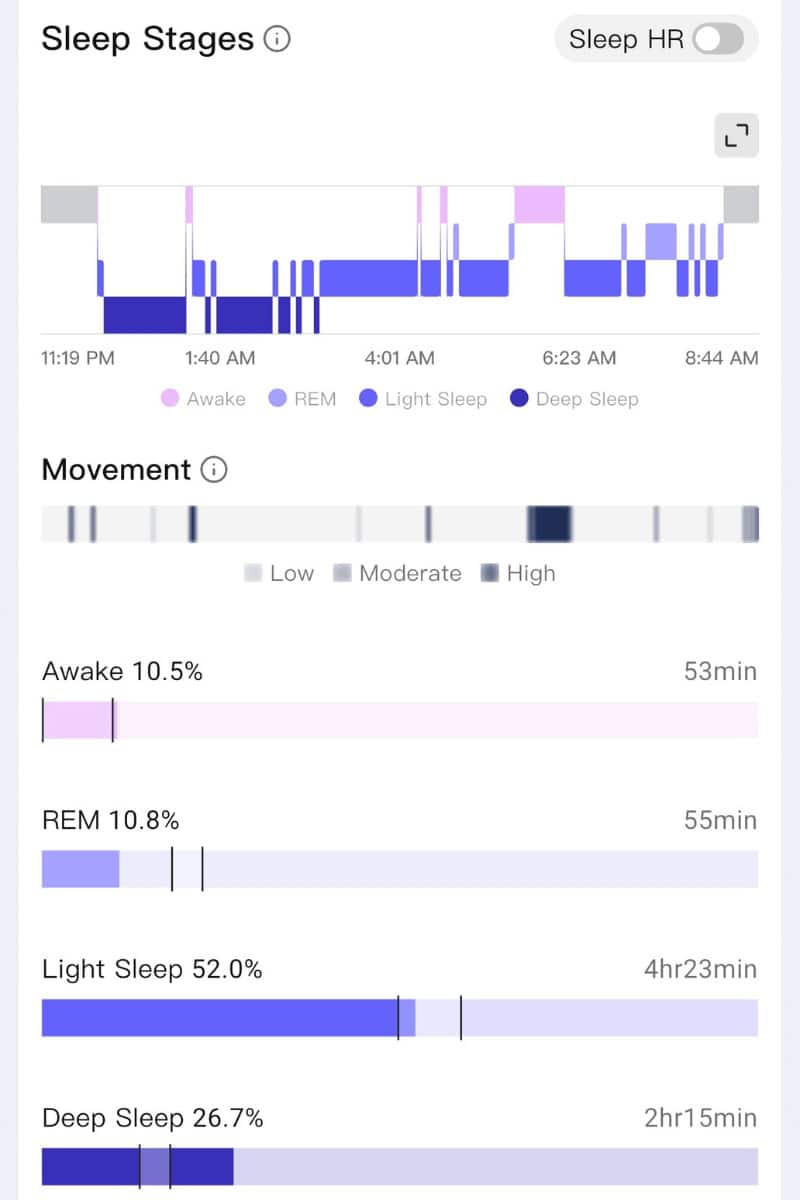
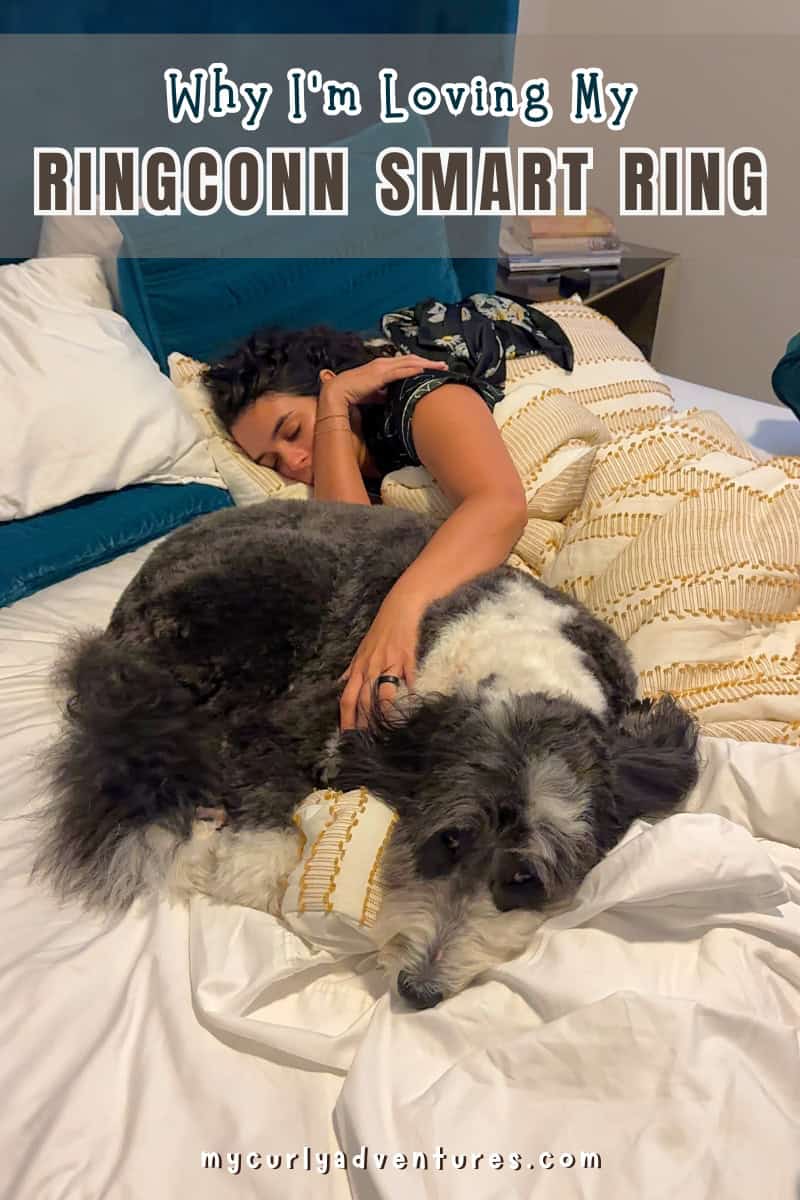
This ring tracks sleep stages including awake, REM, light sleep, and deep sleep. It records patterns like movement, heart rate, oxygen saturation, and temperature throughout the night. It then gives you a sleep score in the app so you can see how restful your sleep really was.
The thing that surprised me most was how it showed the difference between how I felt and what was actually happening with my sleep.
There was one morning where I woke up feeling awful. But I had slept what seemed like a normal amount of hours, and I didn’t remember waking up during the night. When I checked the ring though, it said my sleep quality was poor.
Then another night I actually slept about an hour less, and the ring rated that sleep as high quality.
This truly astonished me and probably made me feel like the ring was worth it. The ring confirmed something I felt in my body. Everyday I can look at my sleep data and use it to manage my day, know if I might need a midday nap, notice trends, etc.
You can see a full breakdown in the app with graphs and timelines. I love being able to visually see what is happening during the night instead of guessing.

Sleep Apnea Monitoring
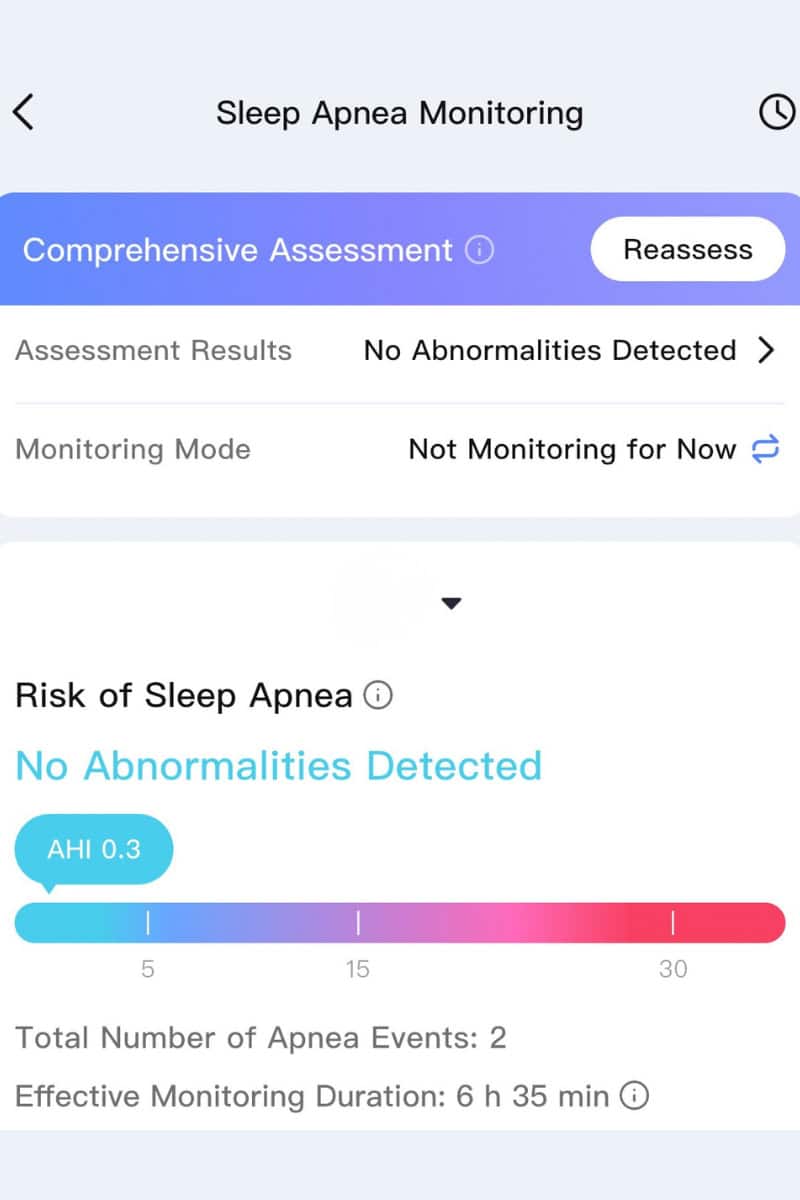
The feature that really caught my attention, though, was the sleep apnea monitoring. I had been wondering if sleep apnea might be part of my problem, but there was no way for me to easily get a sleep study while I was abroad. Obviously this isn’t a medical diagnosis, but it felt like at least a way to see if something might be off.
My sleep apnea test came back negative. Again, not a replacement for a real in lab study, but it was a good thing to semi rule out until I could find the time and place to get a real one.
This ring will look at breathing patterns and blood oxygen trends during sleep and help indicate possible signs of sleep apnea. It’s not a medical diagnosis, of course, but it’s great to notice patterns that may be worth discussing with a doctor. For me, that insight alone has been valuable.
Continuous Vitals Tracking
Throughout the day and night, it tracks:
- Heart rate
- Blood oxygen level (SpO2)
- Heart rate variability (HRV)
- Skin temperature
I also like that it flags abnormalities compared to your normal baseline. Sleep is what I focus on the most, but I really appreciate seeing if anything looks off. It gives me peace of mind and helps me stay aware of changes over time.
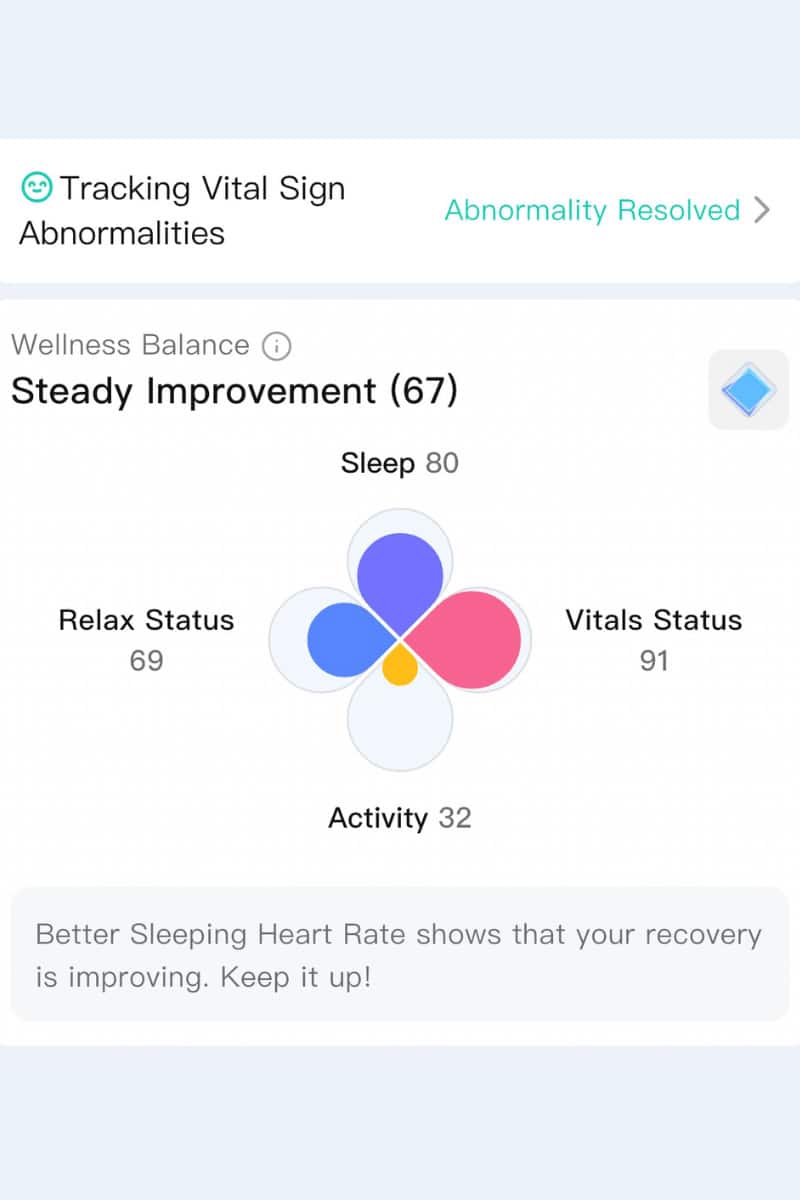
Stress Score & Wellness Balance
The other metric I paid attention to was the stress score. At that point I was trying to figure out whether stress could be contributing to everything. I’m not totally sure how accurate something like that can be, but it was helpful to track patterns instead of just guessing.
The app also provides a stress score and overall wellness balance based on your physiological data. Again, not a replacement for mental health tools but it’s interesting to compare stressful days with calmer ones and see how my body responds throughout the day.

Other Features You’ll Love
Beyond sleep, vitals, and stress tracking, RingConn has several other features that make it a smart and versatile wearable:
- Activity & Step Tracking: It counts steps, tracks calories burned, and monitors your activity levels throughout the day. Perfect if you like to see your movement patterns alongside your sleep and stress data.
- Recovery Insights: The app combines sleep quality, activity, and heart rate variability to give a wellness score and recovery insights, so you know when your body needs rest.
- Menstrual Cycle Tracking & Forecasts: RingConn can track menstrual cycles and provide predictions for your next period or fertile window. This adds another layer of personalized insights, especially for anyone wanting to monitor their health patterns more closely.
- Trends & Analytics: Over time, the app visualizes long-term trends in sleep, heart rate, stress, activity, and wellness, making it easy to spot patterns and understand how lifestyle factors affect your body.
Design, Comfort, and Travel
ve also noticed it’s surprisingly good at picking up when my body is in recovery mode after a workout. After about a week and a half of intense walking, I could actually see how much the first few days affected my sleep. Then over time, the data started improving as my body adjusted and got stronger. It was interesting to watch that shift happen instead of just guessing how I was feeling.
And of course as a traveler, I loved the accurate data of how many steps I got in a day. It’s fun to see how many steps I’d walk on a city. Honestly, that part is just fine. However, the long term data of monitoring my movement trends really provides some value.
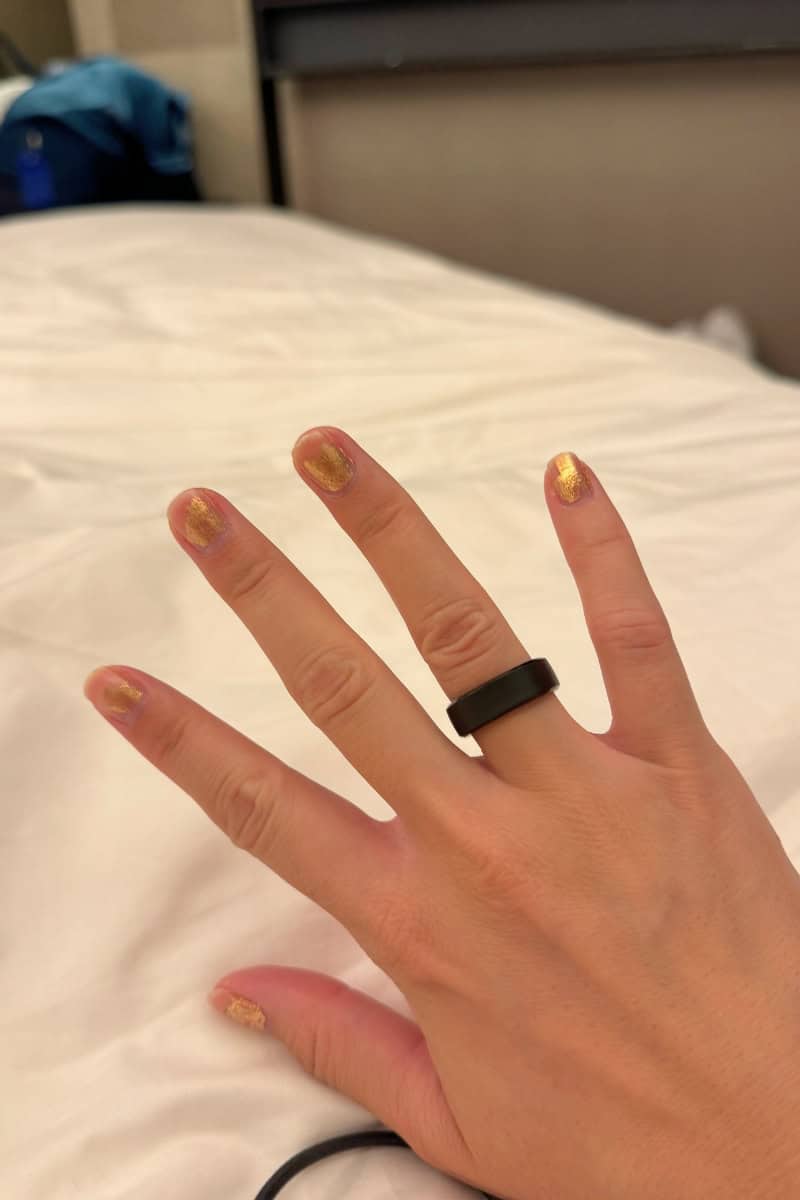
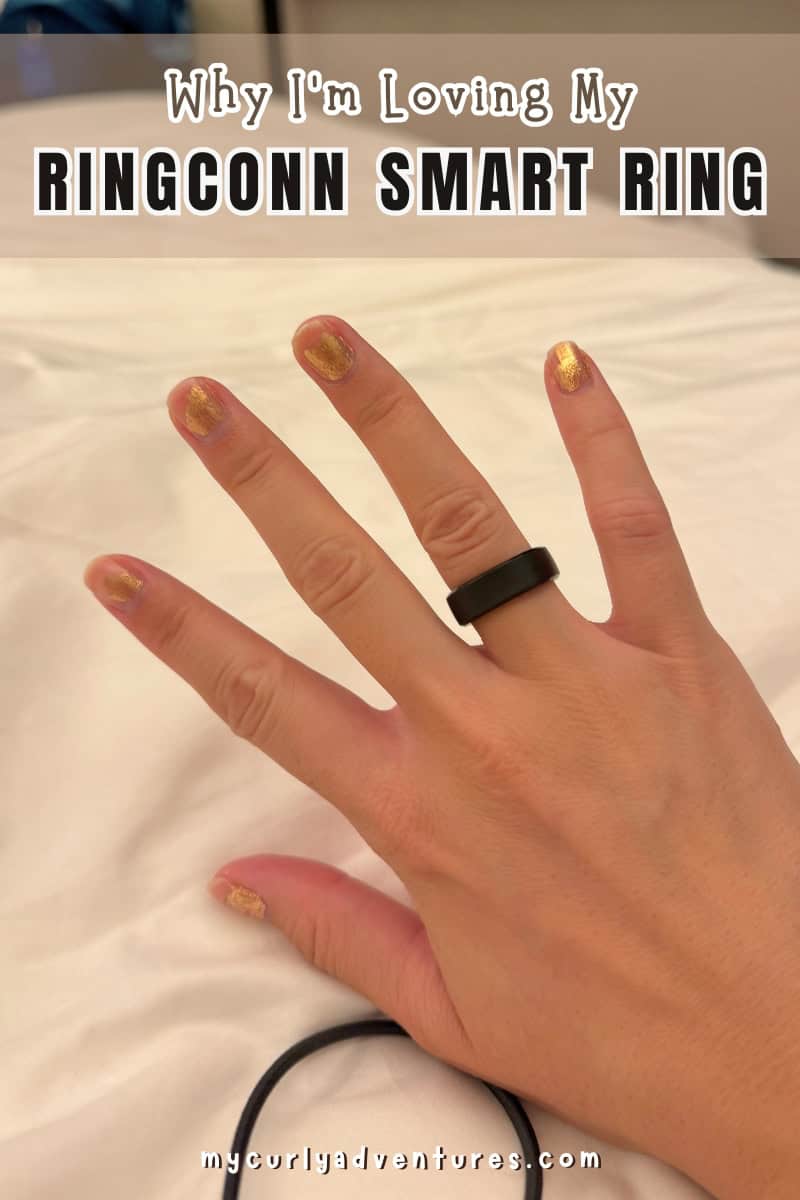
What I love about RingConn overall is how light and comfortable it is. You barely feel it, perfect for 24/7 wear, including sleeping. The ring is made from durable materials and is waterproof, so you don’t have to take it off when washing hands or working out.
Battery life is another standout: most RingConn models last 10-12 days on a single charge, and the portable charging case can keep the ring powered for up to months between home charges. This is great because when I’m traveling I am constantly losing my case!


So is Ringconn Worth it?
Did the ring give me the health answers I was looking for?
No.
But it did give me information at a time when I felt like I had almost none.
I still wear it every day now and honestly forget it’s there.
So it didn’t solve everything.
But when I was abroad, exhausted, and trying to figure out why my body felt so off, it helped me start paying attention to patterns I never would have noticed otherwise. I’ve had it for almost a year now and it’s part of my daily routine. I personally think it’s been worth it since it was a one time payment that continues to pay off.
What It Doesn’t Replace
Before anyone asks, this ring is not a medical device. I always remind myself that the trends are what matter most. It won’t give you a clinical sleep apnea diagnosis. But it’s incredibly useful for spotting patterns especially if you’re waiting on official testing or trying to understand your sleep better.
I can cross reference how I feel with what the data shows. Seeing trends in REM sleep, oxygen levels, heart rate, and stress gives me more awareness of my body than I have ever had before.
RingConn Smart Ring: FAQs
What does RingConn smart ring do?
It uses AI-powered tracking to monitor sleep, heart rate, oxygen levels, and stress patterns all day and night.
Which finger should you wear it on?
The index finger is recommended, but middle or ring finger works too. Just make sure it fits snugly.
How long does the battery last?
About 10-12 days per charge, with the charging case extending total power for months.
RingConn Smart Ring: Final Thoughts
Honestly? I use this every single day and I can’t imagine going without it now. Sleep patterns are my main fascination, but I also love being able to glance at my stress score or notice subtle changes in my heart rate or oxygen levels over time. It feels like a wellness coach on my finger.
If you want a smart health tracker that’s:
- Lightweight and comfortable
- Subscription-free
- Long battery life
- Detailed sleep & vitals tracking
- Helpful trend insights
…then this little ring might just be the best wearable you didn’t know you needed.
Last Updated 1 month ago ago by Jessica Serna | Published: February 24, 2026